

Eddie Marsan - Bethnal Green to Big Screen.
Eddie Marsan reflects on class, typecasting and resilience, tracing his journey from overlooked outsider to one of Britain’s most compelling character actors, driven by instinct and authenticity.
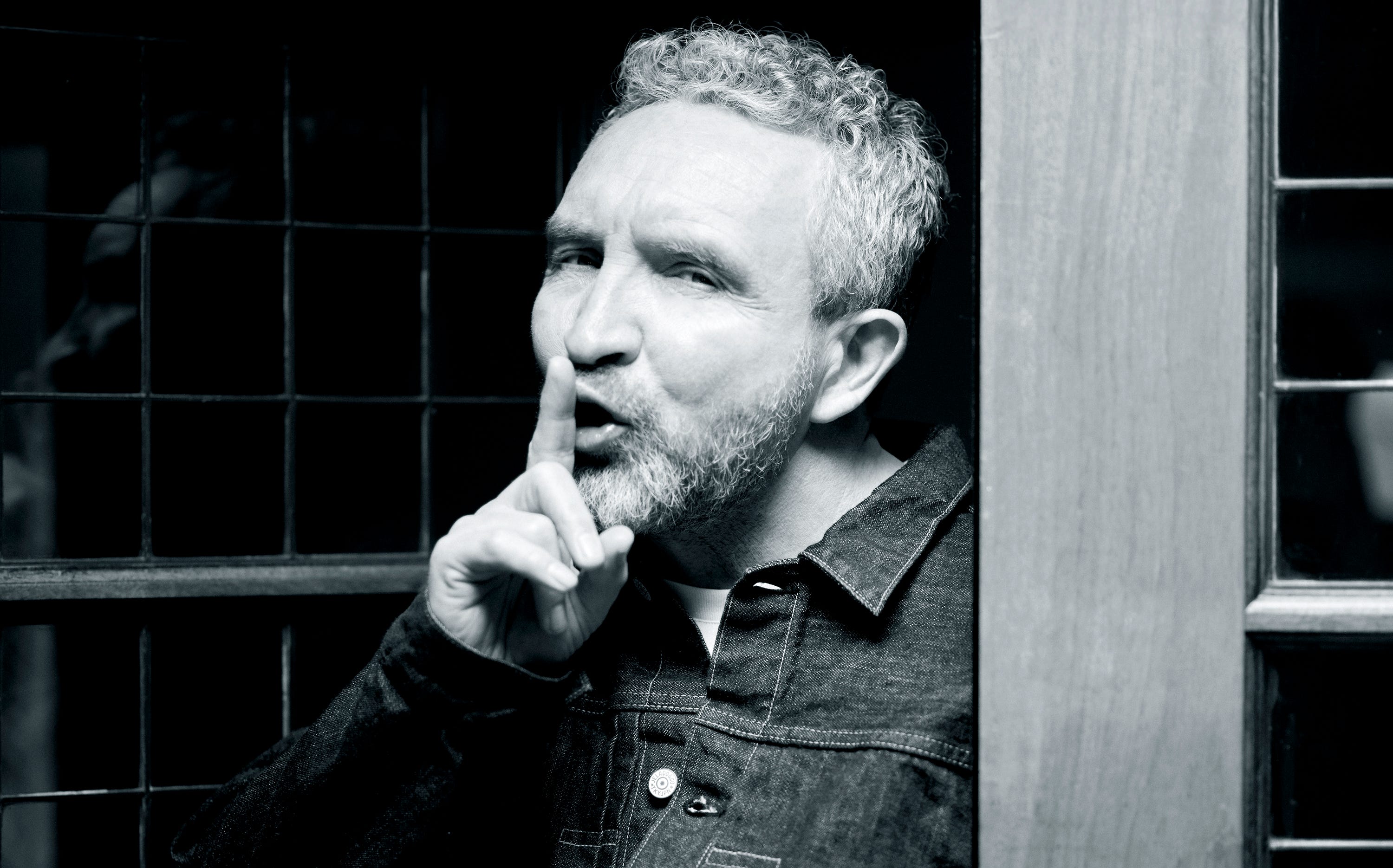
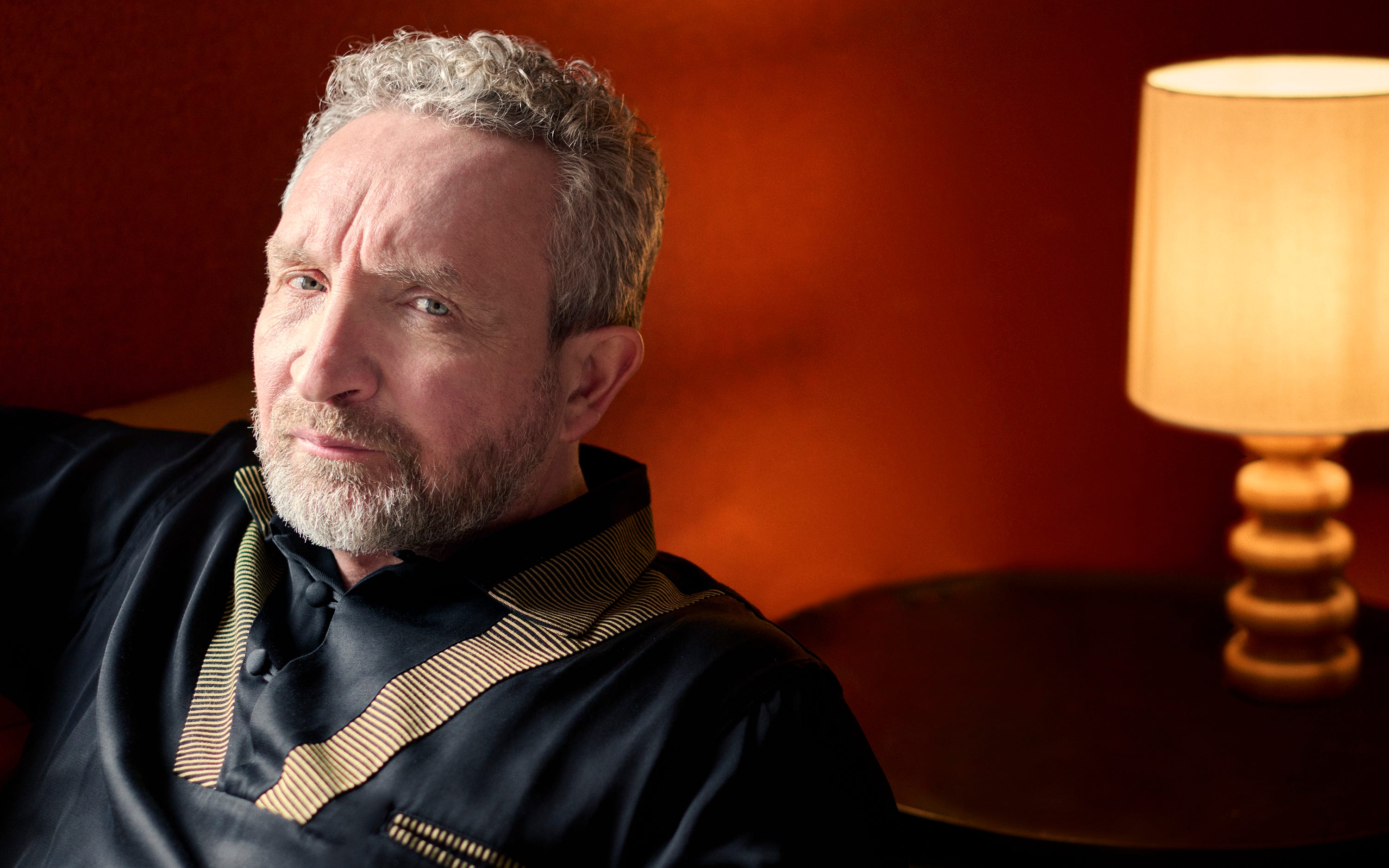
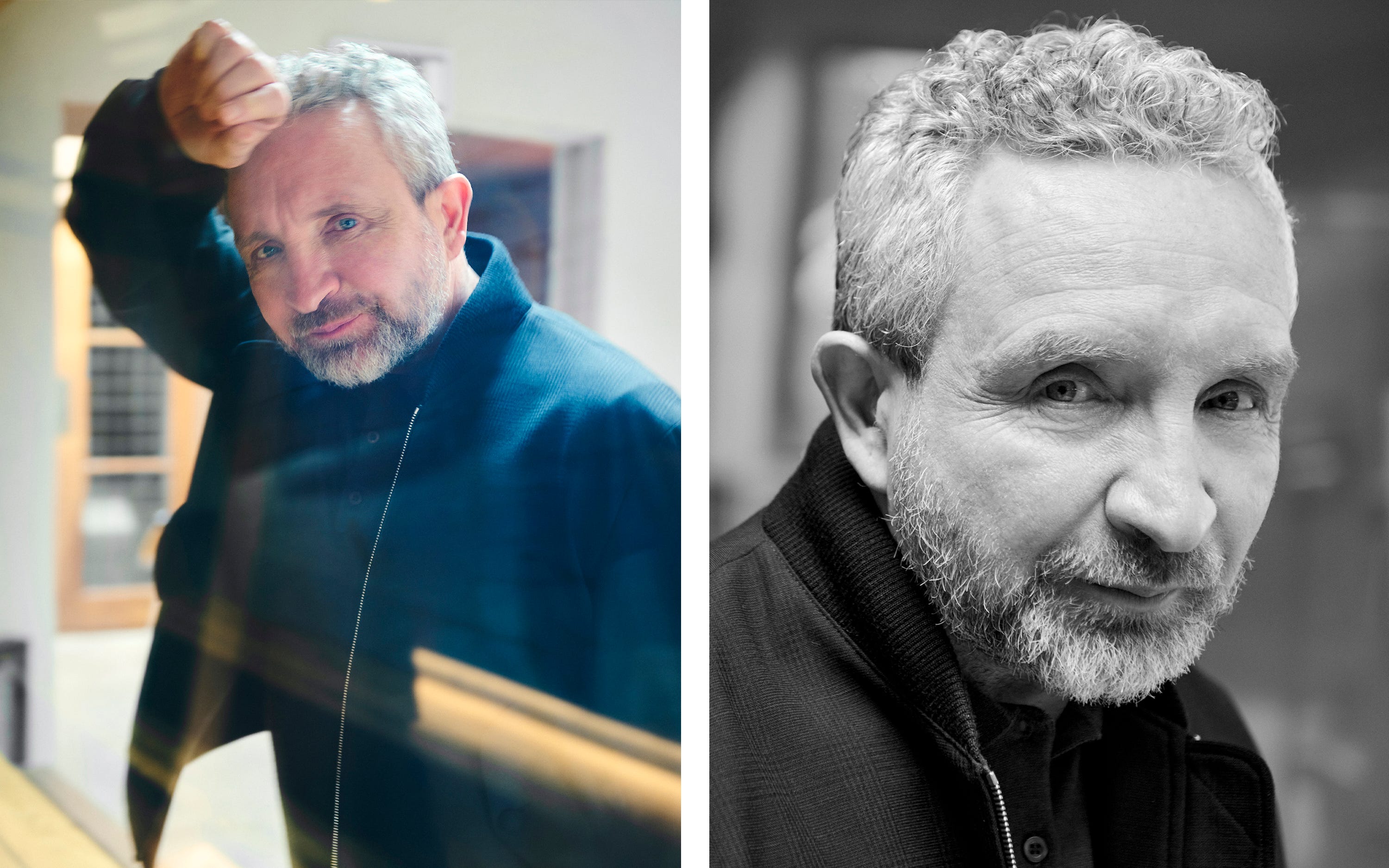
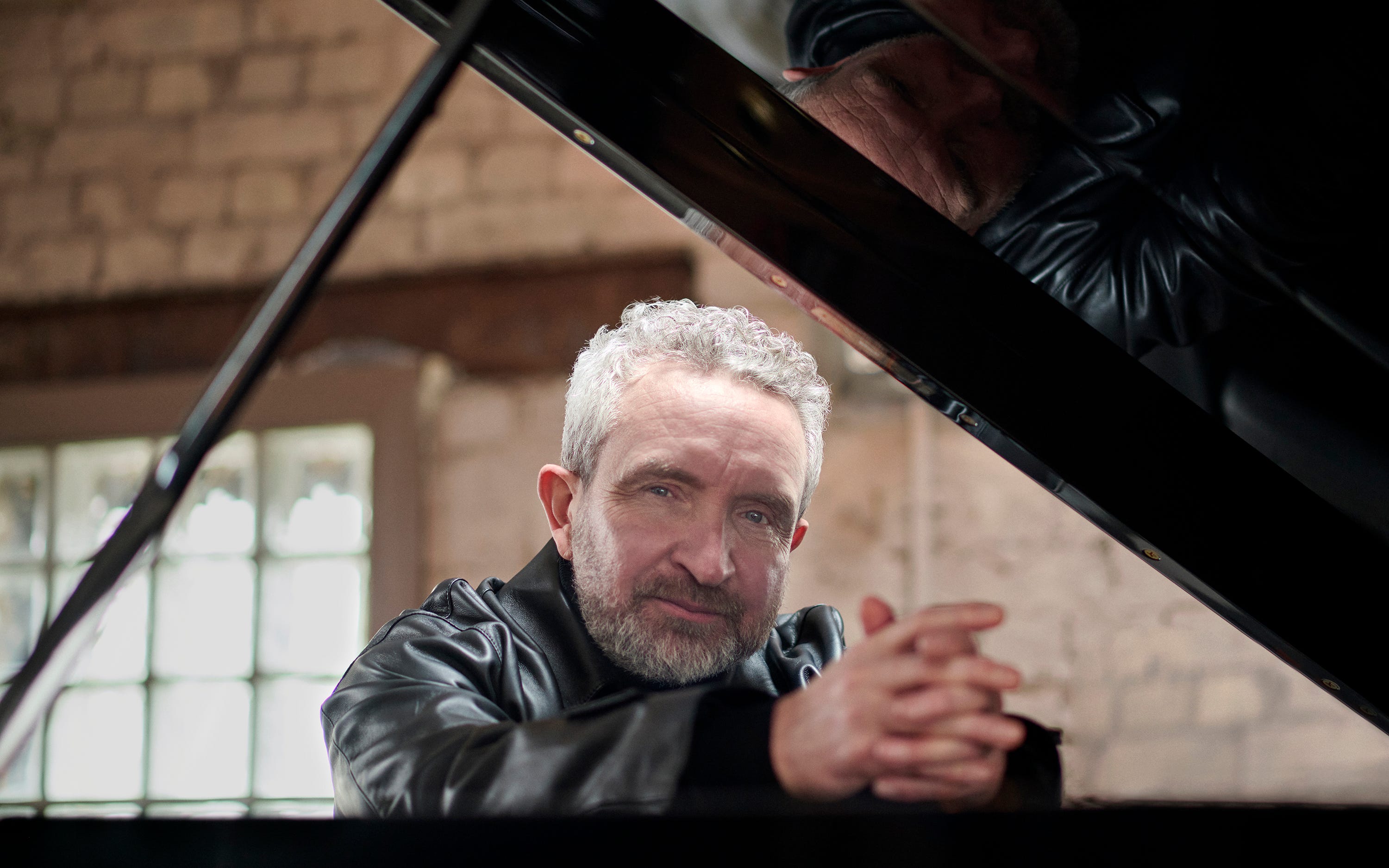
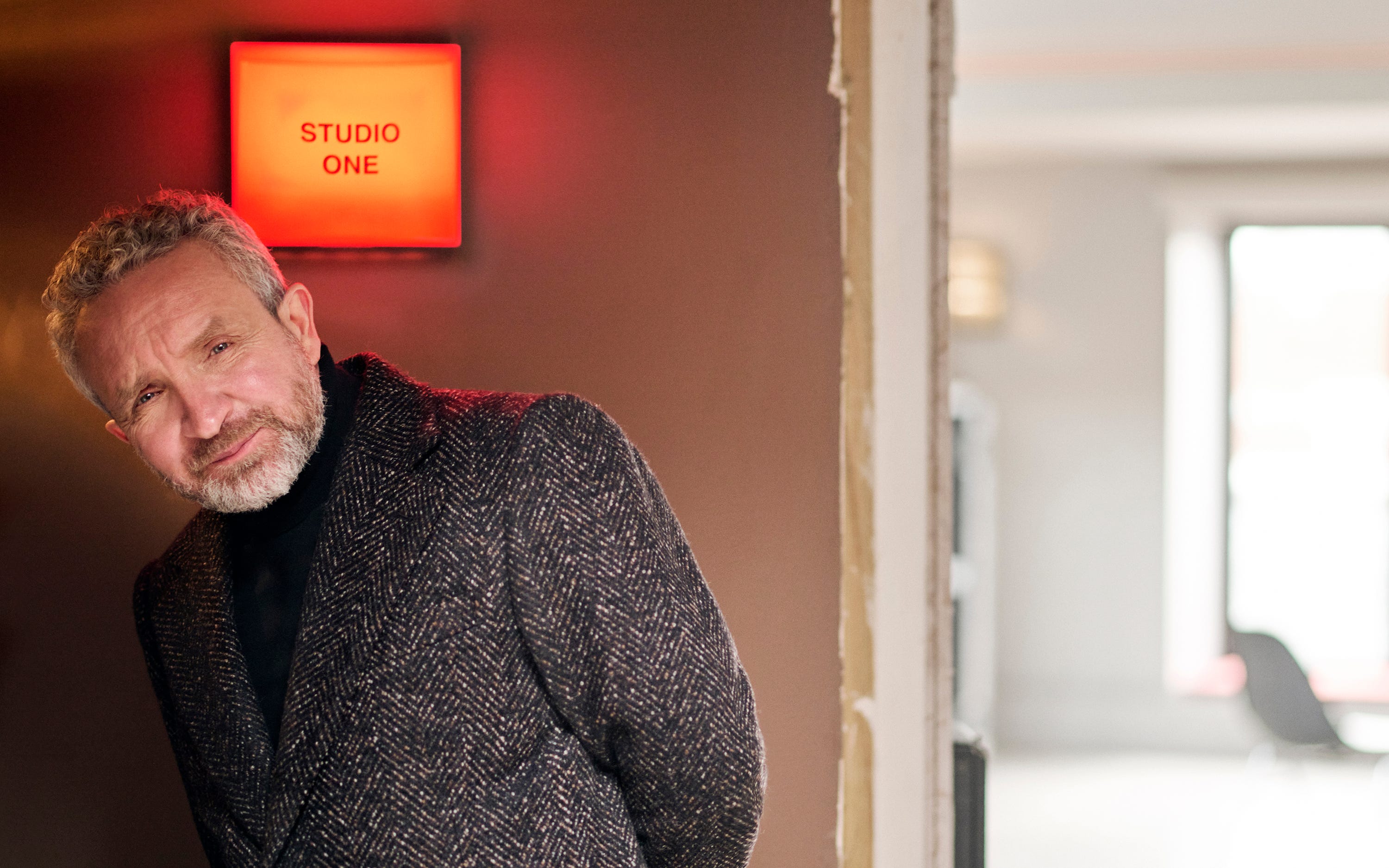
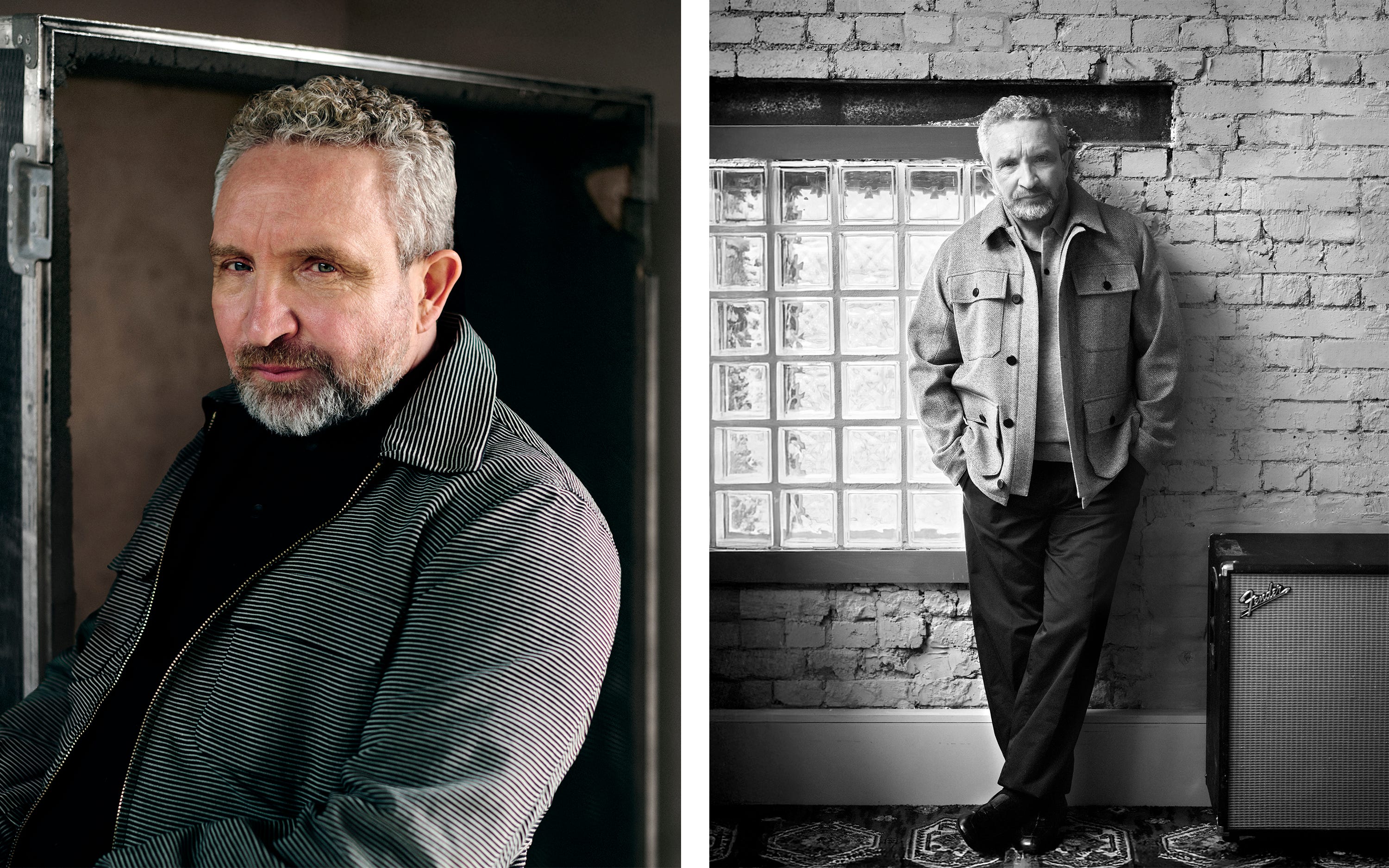
Portraits - Perry Curties
Interview - Philip Goodfellow
Styling - Mark Anthony Bradley
Grooming - Rebecca Doney at Werth Represents using Cloud Nine
Shot exclusively for The 3rd Act at Olympic Studios, London, March 2026.
Some of the earliest credits on Eddie Marsan’s lengthy filmography are quite telling. ‘Yob’. ‘Gang leader’. ‘Intruder’. ‘Mugger’. ‘Young thug’. In an industry where typecasting has been a long-standing issue, particularly back in the eighties and nineties when he was first beginning to forge his career, Eddie’s distinctive look and background put him at risk of being pigeonholed from the outset. ‘They had very fixed ideas of me,’ he explains. ‘Even at drama school; every drama school has the people they think are going to be the lead actors, the big stars, and I was never that. I played smaller parts, so I always knew drama school saw me as being a utility actor. That’s no criticism of them; there were good looking posh boys who were going to play the leads and somebody like me, if I could, the best I could hope for was to be a good character actor, which is what I ended up being.’
Having left drama school, it would be almost eight years before Eddie was earning a living as an actor, but he continued putting in the work during that time, studying three nights a week with various drama teachers and taking on a diverse range of roles in fringe theatre plays across London, including Shakespeare, Pinter and Brecht. ‘By the time the industry employed me as a professional actor, they thought I was straight off the council estate. They didn’t realise that, for seven years, I’d been an artist. I’d been an actor.’
Growing up in East London, it was initially dance that provided Eddie with an expressive outlet; becoming an actor was never part of the plan. ‘I didn’t think it was possible,’ he says. As is often the case though, one creative endeavour ended up leading to the other. After Eddie and a friend were spotted dancing in a club in Hackney, the pair found themselves dancing on a film set as extras in the eighties British thriller Empire State. It was a pivotal moment for Eddie. ‘I saw Jamie Foreman doing a scene – he subsequently became a good friend of mine – and he was so good, it inspired me to become an actor.’
Initially cutting his teeth in various TV roles, Eddie eventually found himself appearing in films as well. Around the turn of the century, the British film industry was happily meeting the considerable demand for homemade gangster films, including Gangster No.1 which Eddie appeared in. Despite their success and popularity, Eddie quickly realised it was a passing fad. ‘I didn’t want to be a professional cockney; I wanted to be an actor. I didn’t want anyone to define me as anything.’ Taking inspiration from fellow British actors such as Gary Oldman, Tim Roth and Timothy Spall, Eddie enlisted a voice coach, learned different accents, and educated himself on the general physicality of acting. ‘One of my advantages – which was a disadvantage at first – is that I had no academic points of reference. I never approached acting academically; it was always visceral. My influences have always been photographs or music or sounds or smells. There’s something about that; if you allow it to inform your physicality and your voice, all those aspects, you can become far more diverse.’
For any committed performer – particularly one looking to forge a career as a character actor – it makes perfect sense for them to expand their abilities wherever possible, but Eddie still found himself treated like a fish out of water. ‘When journalists first began to interview me, they would ask me how I’d escaped Bethnal Green. I found that quite offensive, because I hadn’t escaped; I was doing what I was doing because of Bethnal Green. I grew up in a diverse community and that’s one of the reasons I’m a diverse actor. Growing up in a diverse community, where people are from different religions, or you’d have sleepovers with kids and get to eat different food, you invariably end up questioning your own cultural orthodoxy. If you do that, if you question your own cultural orthodoxy, you’re then more open as an actor to take on other perspectives, which is what acting should be. That’s why I think it was to my advantage. Life’s funny like that; some of the things that people think are a disadvantage actually inspire you to find a solution.’
That talent for diversity played an important part in helping Eddie to establish himself as a highly respected character actor, both in the UK and the US. In 2004, he was cast in Vera Drake, his first experience of working with lauded British director Mike Leigh. Known for his fondness of relying on actors who have delivered for him in the past and successfully navigated his unique method of filmmaking, Leigh called on Eddie again two years later for the role of Scott in the comedy drama Happy-Go-Lucky. Due to Leigh’s approach of ensuring his actors only know as much as their character knows at any given time, the comedy element wasn’t something Eddie was initially aware of. ‘I didn’t know it had levity. In my own narcissism, I thought I was going to be the next Travis Bickle. I thought I was in a really dark film, until he told me to pick up Sally. Then I realised I was in an Ealing comedy.’ Whilst any lesser actor might struggle in such an environment, it is one that Eddie thrived in. ‘That’s the brilliance of Mike. To create a character, you create the prejudices of a character. When I say prejudices, I mean it in the most basic sense. Human beings are prejudicial creatures; we predict what’s going to happen based on what’s happened before. You work on your predictions and you allow yourself to be surprised when they don’t come true. That’s what acting is.’
With 150 films under his belt, many of them British, Eddie is well placed to comment on the current state of the industry. With increasing financial restraints making it difficult to get films made at all – particularly independent films – it is a precarious time. One knock-on effect Eddie has noticed is that filmmakers are returning to the fundamentals of their craft. ‘They have to do a film under a certain budget now, so they can’t use big effects or star casting. What they end up doing is getting good writers and getting good actors, going back to a kind of basics. I noticed that with films like No Ordinary Heist and All the Devils Are Here, just really good writing, really good films. There is a means by which creativity always finds a way and I’m finding that’s happening now. Financially though, it’s very hard.’
Based on the remarkable true story of a bank robbery that took place in Belfast in 2004, No Ordinary Heist sees Eddie – showcasing an impressive Northern Irish accent – play a beleaguered bank manager who, along with one of his hapless security guards, is forced into carrying out the robbery of their bank on behalf of the robbers. After reading the script, Eddie was particularly taken with the premise, not least of all the backdrop to the drama. ‘What really fascinated me was that the bank manager and the security guard had a history together, due to the Troubles. I thought that was fascinating. People who aren’t from Northern Ireland don’t tend to understand; there’s a class system even within the Catholic community, within Northern Ireland, and that’s what the film was trying to explore.’
Along with strong performances from Eddie and Éanna Hardwicke, who plays the security guard accomplice, the film’s claustrophobic feel and highly effective use of sound help to ratchet up the sense of anxiety, as does the occasional appearance on screen of a clock counting down the seconds for the desperate pair. ‘The sound wasn’t in the script, obviously, but the clock was there, so automatically you know the tension is being built up. Every script has to visually show you as much as it can on the screen. It won’t give you music or sound, but it will give you something like the visual of the clock, so you realise that the pressure is building. What you’ve got to do is play someone who’s under that pressure and create an authentic story to bring that to life, so the audience know that you’re really under pressure. It was all Colin McIvor really, he’d written it and directed it and it was all pre-planned. That’s the brilliance of good directing.’
At 57 years young, it feels like Eddie is at the peak of his acting prowess, with films such as No Ordinary Heist and All the Devils Are Here serving to cement the fact that he is more than capable of carrying a film as the lead. ‘The uglier I get, the more I work, and I’m really busy at the moment,’ says Eddie with a wry grin. ‘Certain actors play wish-fulfilment characters – I wish I could be as cool as them or I wish I could sleep with them. I’ve never been employed to do that. I’m employed to be believed as someone else and to find the humanity in them. Even when I was 18, 19, 20, my youth was never the means by which I earned a living. I’ve got a face like a smacked arse. My unusualness is what got me here.’
Upcoming appearances include six-part Sky TV crime thriller Prisoner, which was penned by Bridge of Spies writer Matt Charman, and Campeón Gabacho, a romantic drama directed by Jonás Cuarón. Still very much in demand in front of the camera, the idea of one day working behind the camera isn’t one that has escaped Eddie. ‘I have been asked to direct films,’ he reveals. ‘I didn’t do it initially, because I spent nine years doing Ray Donovan in the US and I used to commute back and forth, so there was never space enough for me to direct anything as I was always committed to have to go back in six months or so. That’s why I haven’t done theatre for years either, because I was working on a long-range show and had four children under the age of seven at the time. There was never any justification for me to go and do a play. I keep being approached though and there are things happening now. People are very interested to see how I direct. I’m interested.’
No Ordinary Heist is in cinemas now.
Prisoner is on Sky TV, soon.
Portraits - Perry Curties
Interview - Philip Goodfellow
Styling - Mark Anthony Bradley
Grooming - Rebecca Doney at Werth Represents using Cloud Nine
Shot exclusively for The 3rd Act at Olympic Studios, London, March 2026.